

This question showed up on the Pelvic Fractures post today:
> My precious Schnauzer/Yorky mix was hit by a car & broke her
hip 7 years ago. She has healed and walks on her leg from time to time
but I have noticed great sensitivity when I touch her leg lately.(nerve
damage?)She goes under the bed a lot which tells me she is in pain.I
would love to find a natural alternative to help her with pain and
possible arthiritis. I did have her on Previcox at one time but it
seemed to upset her already sensitive stomach.Somebody recommended a
joint pill by Drs foster& Smith.i would love to get your input on
this. Any ideas or suggestions will be greatly appreciated.
Hello, Celeste,
With the history you have given, I would be very much surprised if your dog did NOT have arthritis. Arthritis is defined as inflammation of a joint. Pain is included in the definition of inflammation. Any dog may experience wear and tear on the joint with age, but when there has been an injury, it will almost certainly be worse.
The injury usually produces an irregular joint surface or an imperfect mating of the two bones in the joint. This will cause more wear and cause it sooner than one would expect in a normal joint. Irregularity and loss of the flexible,smooth cartilage coating will lead to bone-on-bone contact and this is painful.
Previcox is one of a large group of drugs referred to as NSAIDs, short for non-steroidal anti-inflammatory drugs. In other words, they are drugs to relieve pain and inflammation that are not some form of cortisone. Cortisone is a great anti-inflammatory drug, but has many other side-effects in the body.
The NSAIDs have fewer side-effects than the cortisone, but they still have side-effects. Most common are GI problems, ranging from loose stools, to blood in the stool, to vomiting, to bleeding ulcers. If a big overdose is given, they can damage the kidneys. As with any drug, you can also have idiosyncratic reactions, meaning that some individuals just cannot tolerate the medicine, even though most do fine with it.
Over the counter NSAIDs include aspirin, ibuprofen (Advil), and naproxen (Aleve). You really should consult your veterinarian before giving ANY of these to any pet. There have been reports of a bleeding ulcer after a dog receiving a single dose of ibuprofen.
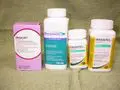 There are numerous potent NSAIDs approved for dogs. Phenylbutazone used to be a mainstay, but the new drugs are much safer and give more relief. In addition to the Previcox you mentioned, I personally use Rimadyl, Deramaxx and Metacam. There are others available.
As with people, sometimes an individual has poor tolerance for one NSAID, but does well with another. If your dog did poorly with Previcox, Rimadyl might work fine. You just have to try it and see. It is important to do this in cooperation with your veterinarian. Do NOT combine the drugs, as you can cause serious, even fatal, side effects by doing so.
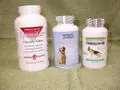 There are also many supplements sold to help with arthritis. Most of these contain glucosamine, chondroitin sulfate, or MSM, among other ingredients. There are several studies on this, with conflicting results as to how effective they really are. I believe that these are beneficial for a lot of dogs, and they rarely have any side effects. You generally have to take them for a month before you can really see any improvement, though.
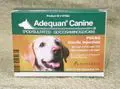 Some dogs really respond great to Adequan (polysulfated glycosaminoglycan) injections. These are given at 4-day intervals for four to eight injections. No side effects are likely, and some patients have miraculous results: i.e. they do great for six months without other medicines. Unfortunately, other patients may show no benefit whatsoever. Personally, I can't predict who is going to get the miracle, and who is going to get nothing out of it. It's a pretty reasonable cost to take a chance on a small dog. It's pretty expensive for a big dog if it isn't going to work. I wish I could predict who will get the miracle.
In summary, to answer your question, I would recommend starting some type of glucosamine supplement. I think Adequan would be definitely worth trying. I would also consider trying Rimadyl or Metacam to see if your dog does better with those than with Previcox.
Non-medical alternatives include physical therapy, acupuncture, therapeutic laser, massage, and veterinary chiropractic. It is often difficult to find access to a veterinarian with expertise in these areas, though. My friend, Dr. Ava Frick is one of the best.
Good luck.
Thank you for information.
Pathology.org is the largest up to date informational database consisting of general health and disease information. The only way to combat disease and promote healthy living is to provide the public current information on health and diseases. Pathology.org consists of breaking news in the health world and offers the information needed to take preventive and combative measures to fight disease. Your website seems to be a very credible resource and would beneficial to us in the fight to combat the contraction and spread of disease. You can aid us in this fight by simply putting a banner or link up for us, making our site available to your vast public.To avoid spam please email me back with your blog/site’s url so that we can list your blog/site as featured resource.
Title: Stem cell research or Pathology
Url: http://www.Pathology.org
The cause of rheumatoid arthritis is unknown. Some scientists feel that it may result from an infection, but there is no evidence that it is contagious. For whatever reason, the joint lining becomes very inflamed and thickened, slowly destroying cartilage and bone. The goal of treatment is to halt the inflammation and prevent the destruction of joints.
Medical supervision is a must, because this form of arthritis can be crippling, other organs may be affected and all treatments may, on occasion, cause side effects.
In many forms of arthritis, the inflammation does not go away as it should. Instead, it becomes part of the problem, damaging healthy tissues of the body. This may result in more inflammation and more damage – a continuing cycle.
The damage that occurs can change the bones and other tissues of the joints, sometimes affecting their shape and making movement hard and painful. Diseases in which the immune system malfunctions and attacks healthy parts of the body are called autoimmune diseases.
One method of physical therapy that is often used for dogs is swimming. When wearing a dog life jacket, it is easy on the joints but still gets the movement required to lubricate the joints.
thanks for the information for not over looking the animals.
The damage that occurs can change the bones and other tissues of the joints, sometimes affecting their shape and making movement hard and painful. Diseases in which the immune system malfunctions and attacks healthy parts of the body are called autoimmune diseases.
So are you saying that statins might play a role in decreasing the severity of various auto-immune diseases? If that’s what you’re saying – it’s an interesting hypothesis worth exploring
what the matter reason, the joint lining becomes very inflamed and thickened, slowly destroying cartilage and bone.
I agreed that many dogs may experience wear and tear on the joint with age, but when there has been an injury, it will almost certainly be worse.